Solar panels for your home
Generate your own electricity from a system sized to your roof and your usage.
Typical budget Under £50,000 A guide only. You get a fixed quote after the survey.
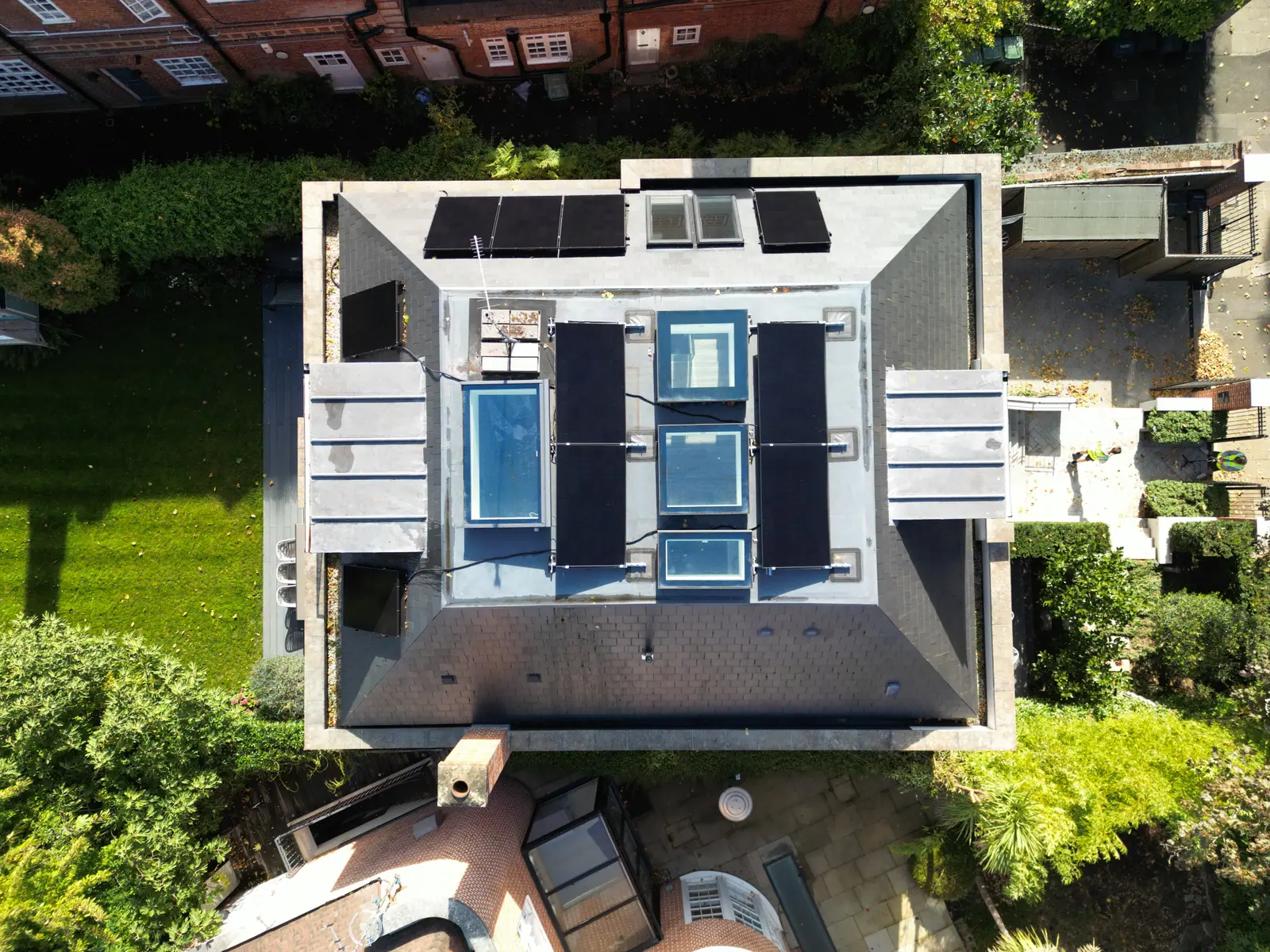
What it is and how it works
Solar photovoltaic panels turn daylight into electricity. Each panel is a set of cells that produce direct current when light falls on them. An inverter turns that into the alternating current your home runs on. Anything you do not use in the moment goes to a battery, if you have one, or out to the grid.
The panels sit on rails fixed to your roof rafters. A typical domestic system is between 3 and 6 kilowatts peak, written as kWp, which is the output the panels are rated for in full sun. Real output depends on the direction and pitch of your roof, any shading from trees or chimneys, and the weather. That is why we model it before we quote rather than quoting from a postcode.
Cost and grants
The price of a system depends on the number of panels, the roof, the inverter and whether a battery is part of the design. We give a fixed quote after the survey, itemised so you can see what each part costs.
Getting a quote? Fill in our solar and battery checklist first, so we can size your system before we visit.
Two things are worth knowing now:
- 0% VAT. The supply and installation of solar panels in a residential property is zero-rated for VAT in Great Britain until 31 March 2027. The rate is due to return to 5% from 1 April 2027.
- Smart Export Guarantee. This is the statutory scheme that lets households sell unused electricity to a licensed supplier. Suppliers set their own rates and they change, so we do not print a rate on this page. We explain the current options at handover.
Figures reviewed 10 September 2026.
Solar and the rest of your home
A solar system is the foundation the other technologies build on. A battery stores daytime generation for the evening. An EV charger can be set to charge only from surplus solar. An air source heat pump or an air-to-air unit runs on the electricity you make. We design the panel system with those in mind so nothing has to be replaced later.
Pros and cons
Pros
- Cuts the electricity you buy from the grid, most of all in spring and summer
- No VAT on the supply and installation of a home system until 31 March 2027
- Panels carry long manufacturer warranties and need very little maintenance
- Pairs with a battery, an EV charger or a heat pump later, if the design allows for it now
- Unused generation can be sold back to the grid under the Smart Export Guarantee
Cons
- Generation is lowest in winter, when most homes use the most energy
- A shaded, north-facing or very small roof will limit what a system can do
- The upfront cost is real and payback takes years, not months
- Listed buildings need planning permission, and conservation areas limit panels on walls facing a road
- Export payments only apply once the installer and the system meet the scheme rules
Who it suits
- Homes with a south, east or west facing roof and little shading
- Households that use electricity during the day, or plan to with a battery or EV
- Owners who expect to stay in the property long enough to see the payback
- Anyone planning a heat pump or an electric car in the next few years
What is included in a Bespoke installation
- A site survey by an engineer, including roof measurement and a shading check
- A modelled design showing expected generation for your roof and your usage
- Tier-one panels, a hybrid inverter and mounting hardware from named manufacturers
- Scaffolding, installation, electrical connection and commissioning by the same team
- DNO notification and the handover pack you need for export payments
- Monitoring set up on your phone before we leave
Frequently asked questions
How many panels will I need?
It depends on your roof and how much electricity you use. A typical family home fits eight to fourteen panels. We model your roof and your usage before we quote, so the number comes from the design, not a brochure.
Do I need planning permission for solar panels?
Most homes in England can install roof-mounted panels under permitted development. The rules changed on 27 August 2026. Flats have tighter limits than houses, listed buildings need a planning application, and conservation areas restrict panels on walls facing a road. We check this at the survey before you commit to anything.
Is the 0% VAT on solar panels still available?
Yes. The zero rate for supply and installation of solar panels in residential property runs until 31 March 2027, after which it is due to revert to 5%. We show the VAT treatment on every quote.
Can I sell electricity back to the grid?
The Smart Export Guarantee lets eligible households sell unused generation to a licensed supplier. Suppliers set their own rates and change them often, so we do not print a rate here. We explain the current options at handover and set up the paperwork you need.
Figures reviewed 10 September 2026.